



Oregon State University Rehearsal Classroom Building
Location: Corvallis, Oregon
Year Constructed: 1909
Work Completed: 2024
Project Budget: 4.8 million
DeMuro Award Recognizes: Adaptive Reuse, Social and Cultural Equity, Historic Preservation
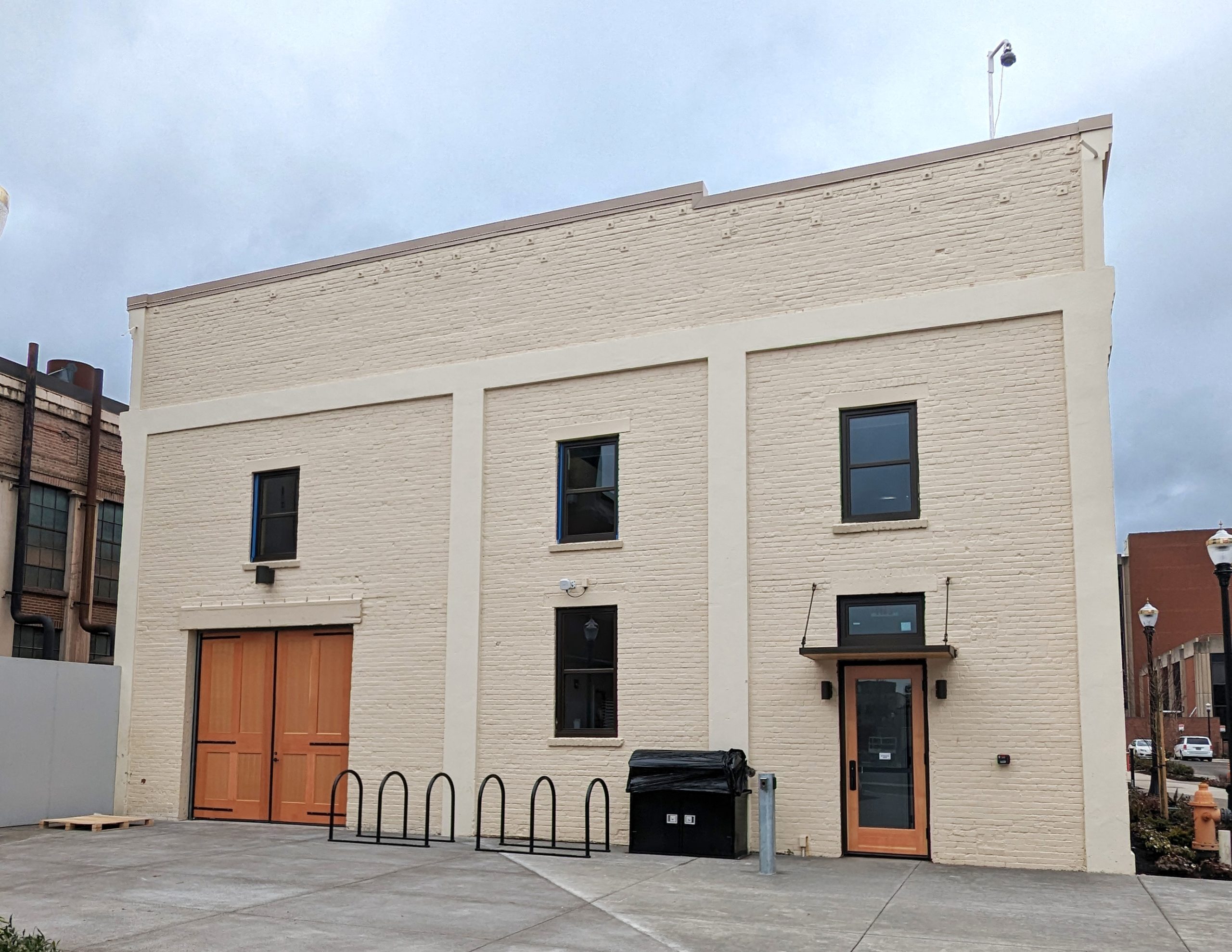
History: Constructed in 1910 as a heating plant for what was then Corvallis State Agricultural College, the Rehearsal Classroom Building was initially designed to complement the Fieldhouse to the north. The 1910 building design would have been classified as “revival-castellated”. The original intent was for the building to be symmetrical with five bays of windows and a pair of towers at the south end that matched the tower that existed on the McAlexander Fieldhouse. However, the building appears to have been truncated during construction, and the elevation of what was an interior wall became the south facade of the building. Since the towers were not constructed, the building lacks a distinct design style.
In 1923, the building was converted to a target range to support the U.S. Army ROTC program. All windows were bricked over at that time. The range then became the home of the OSU Rifle Team and the OSU Pistol Team, respectively, since 1944 and 1948, until 2021. As of June 2021, the OSU Anderson & Keeling Memorial Target Range was permanently closed. After nearly 100 years as a firing range, there was significant damage to virtually all interior surfaces.
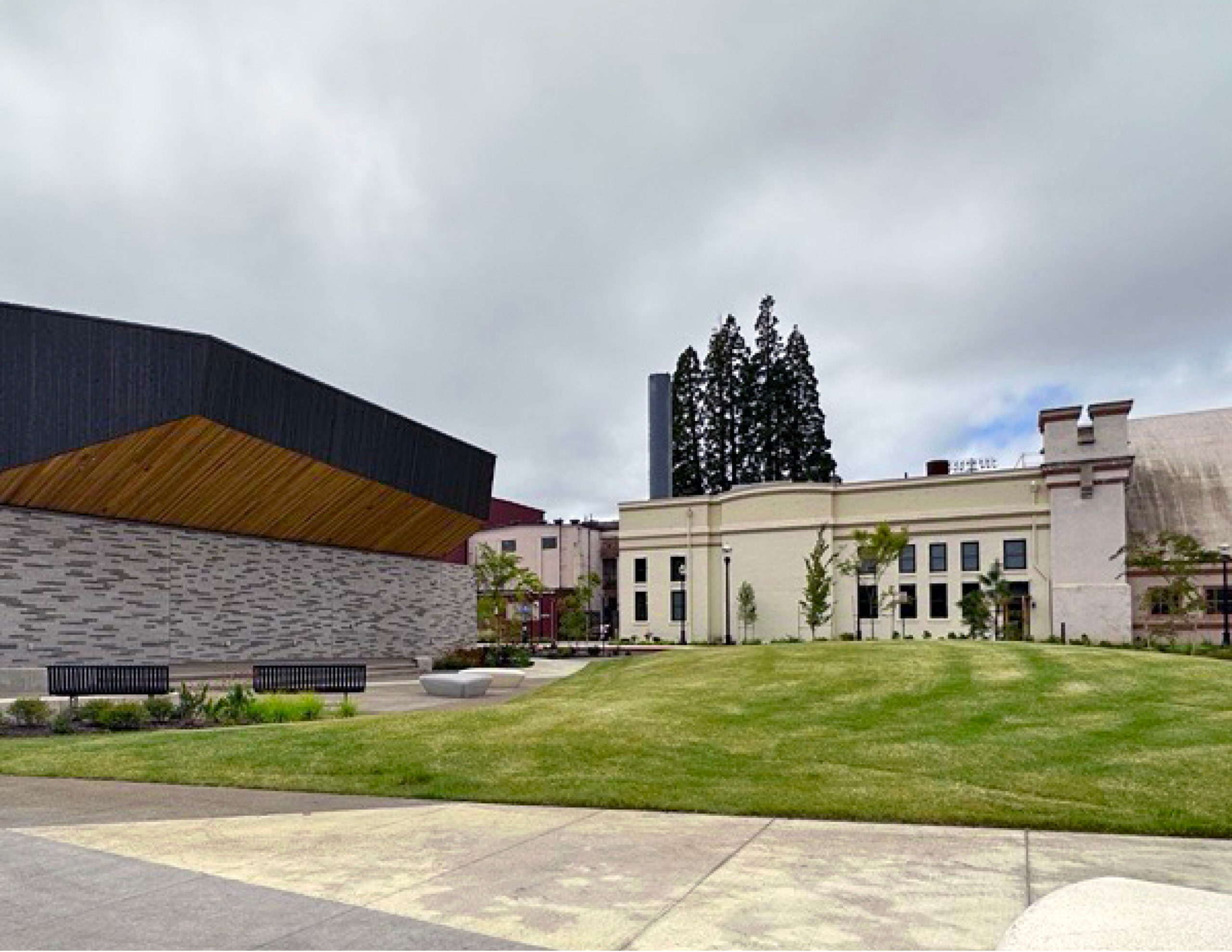
Overview: The Rehearsal Classroom Building was renovated in conjunction with the design and construction of an adjacent new performing arts center, together forming a campus gateway arts district that fosters culture, creativity, and inclusivity. The building has an extraordinary history. Originally a heat plant and then a firing range, it comes into its full maturity as an arts space. In addition to providing rehearsal space for medium and large ensembles, it also hosts ensemble performances, student recitals, and sonic installations.
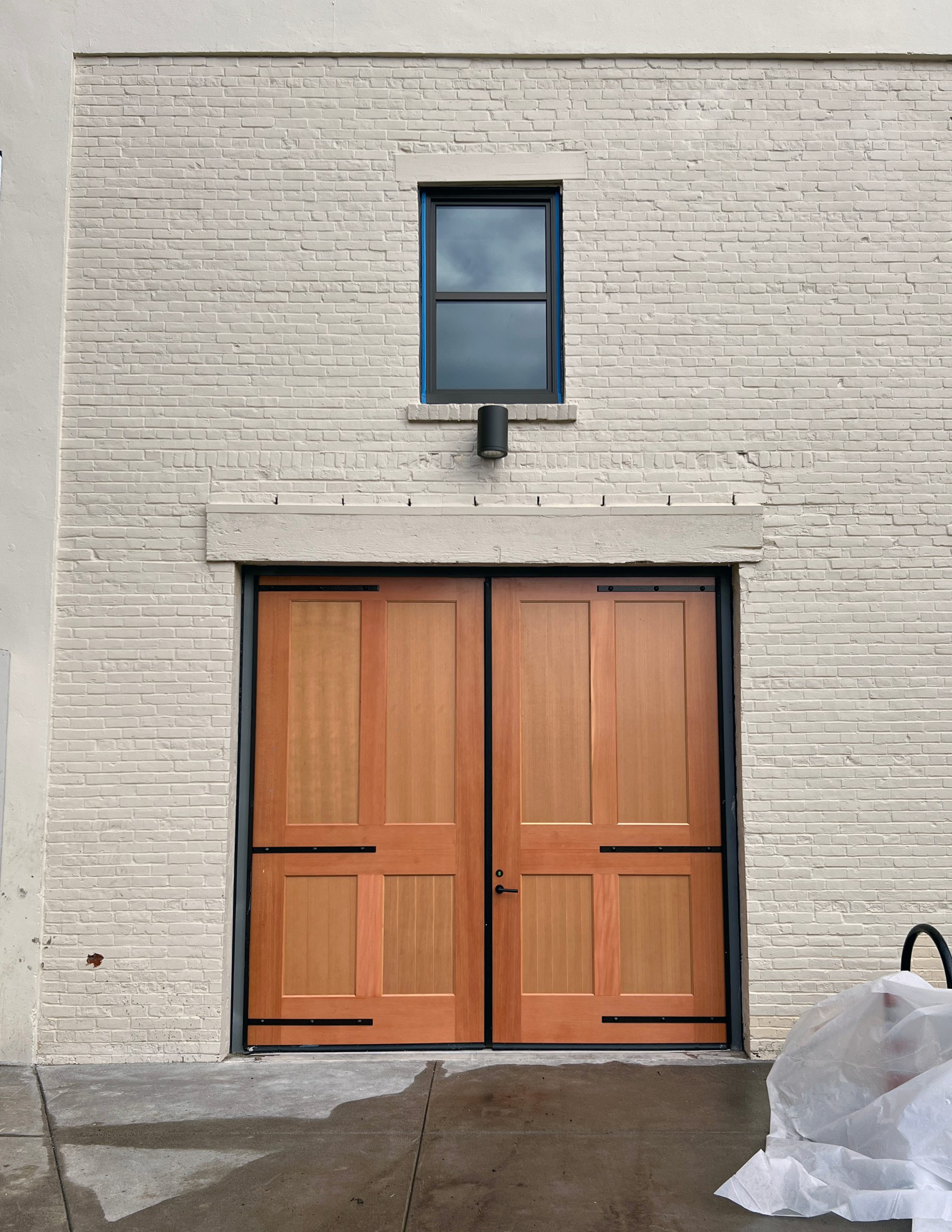
Designing for such a unique history required exceptional problem-solving and craftsmanship. New mechanical, electrical, and plumbing systems, upgraded acoustics, and structural interventions were sensitively integrated to ensure modern functionality within a historic envelope. Elements such as seismic upgrades and enlarged openings, necessary to meet accessibility and exit requirements, were not only essential for longevity and safety but were also executed with minimal visual impact to maintain architectural continuity.
However, it was essential to the project designer that the building's history be understood from the interior as well. Instead of full walls, partial-height walls were constructed to provide the necessary surfaces for acoustic treatments and classroom requirements, such as video projection. Therefore, in all directions, it is possible to see the layers of history of the building, including the original masonry walls, steel trusses, and wood roof structure. However, beyond that, it is possible to see the life the building has lived since its construction, including the patches in the floor where the original steam tunnel connected to other parts of the campus and where cuts were made to accommodate new footings for the seismic reinforcements. At eye level (and above, and below!), the chips and dings, due to the windows being bricked up and the surfaces being subjected to years of use as a firing range, were only repaired to the extent necessary for structural integrity. This adds a layer of historical texture that is essential to understanding the building's previous incarnations.
Congratulations to the entire project team:
Holst Architecture
Oregon State University
Froelich Engineers
Acoustic Design Studio (ADS)
Hoffman Construction Company
PLACE
PAE
Susan Licht, Historical Architect
Pence/Kelly Concrete
Floor Solutions LLC
Pioneer Waterproofing
(Historical Brick)
Norse Ironworks
Interior Exterior Specialists
JS Perrott & Co
Snyder Roofing
Streimer Sheet Metal Works
Dallas Glass
Marvin Windows
Hydro-Temp Mechanical
Prestige Tile and Stone
Armstrong Ceiling and Wall
JM Painting
Tube Art Displays
Wenger Corporation
Valley Shades
Absolute Procurement
Hyphn
Bergelectric Corporation
Photos by Holst Architecture