

The Joyce
Location: Portland, Oregon
Year Constructed: 1912
Work Completed: 2023
Project Budget: $14.1 million
DeMuro Award Recognizes: Anti-displacement, Affordable Housing, Creative Seismic Upgrade
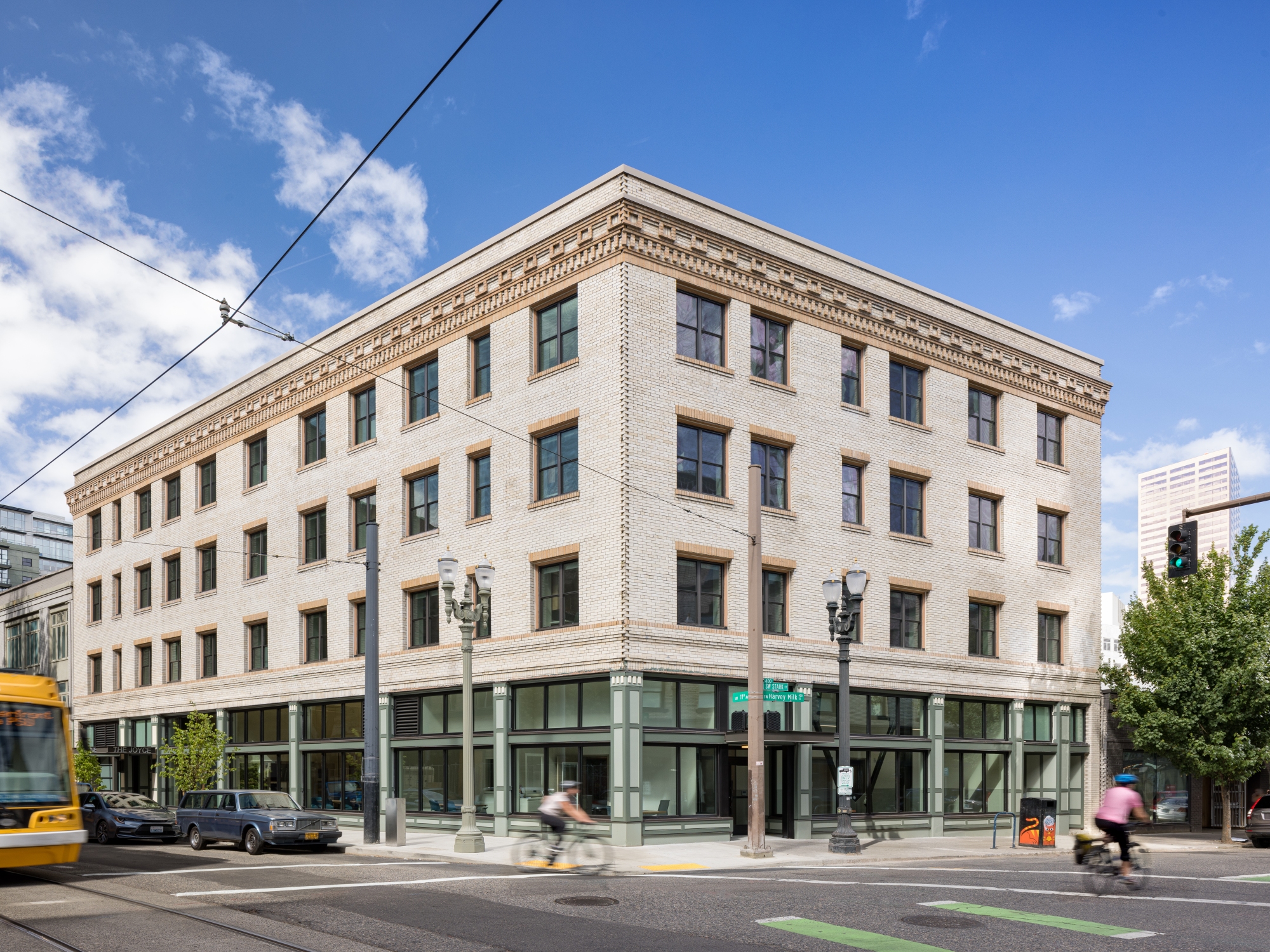
History: Developed by a woman hotelier and built in 1912, the building first operated as the Hotel Alton, catering to business travelers. It later became Hotel Treves and was renamed the Joyce in the 1960s, when it shifted its focus toward providing low-cost housing, often serving people with the greatest need.
Throughout its history, the building housed many individuals who were underserved by the housing system. Located on SW Harvey Milk Street, The Joyce became an essential site for Portland’s LGBTQIA+ community, particularly during the AIDS crisis, when it provided shelter to gay men living with late-stage AIDS, transgender residents, and others facing housing discrimination or instability. These layers of use and identity make the building significant beyond its architectural features. By the time the Portland Housing Bureau acquired the building in 2016 using funds from the City’s Housing Bond, the structure was vacant, experiencing long-term water infiltration issues, and in an uninhabitable condition.
Overview: The project goal was to rehabilitate the building and adaptively reuse it as Permanent Supportive Housing (PSH), designed for individuals who have experienced chronic homelessness and benefit from ongoing services. Community Partners for Affordable Housing (CPAH) served as the developer, and Carleton Hart Architecture led the design team.
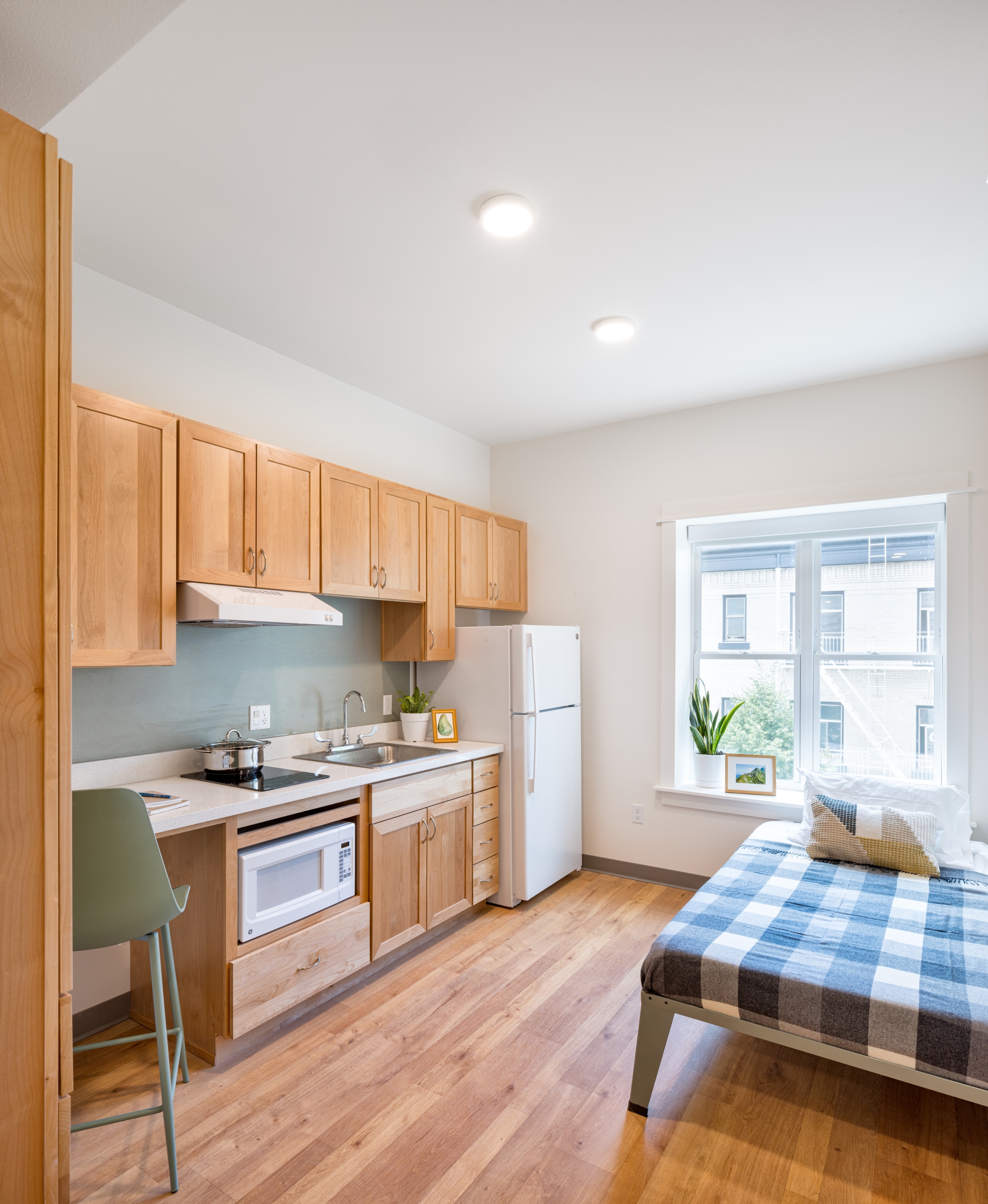
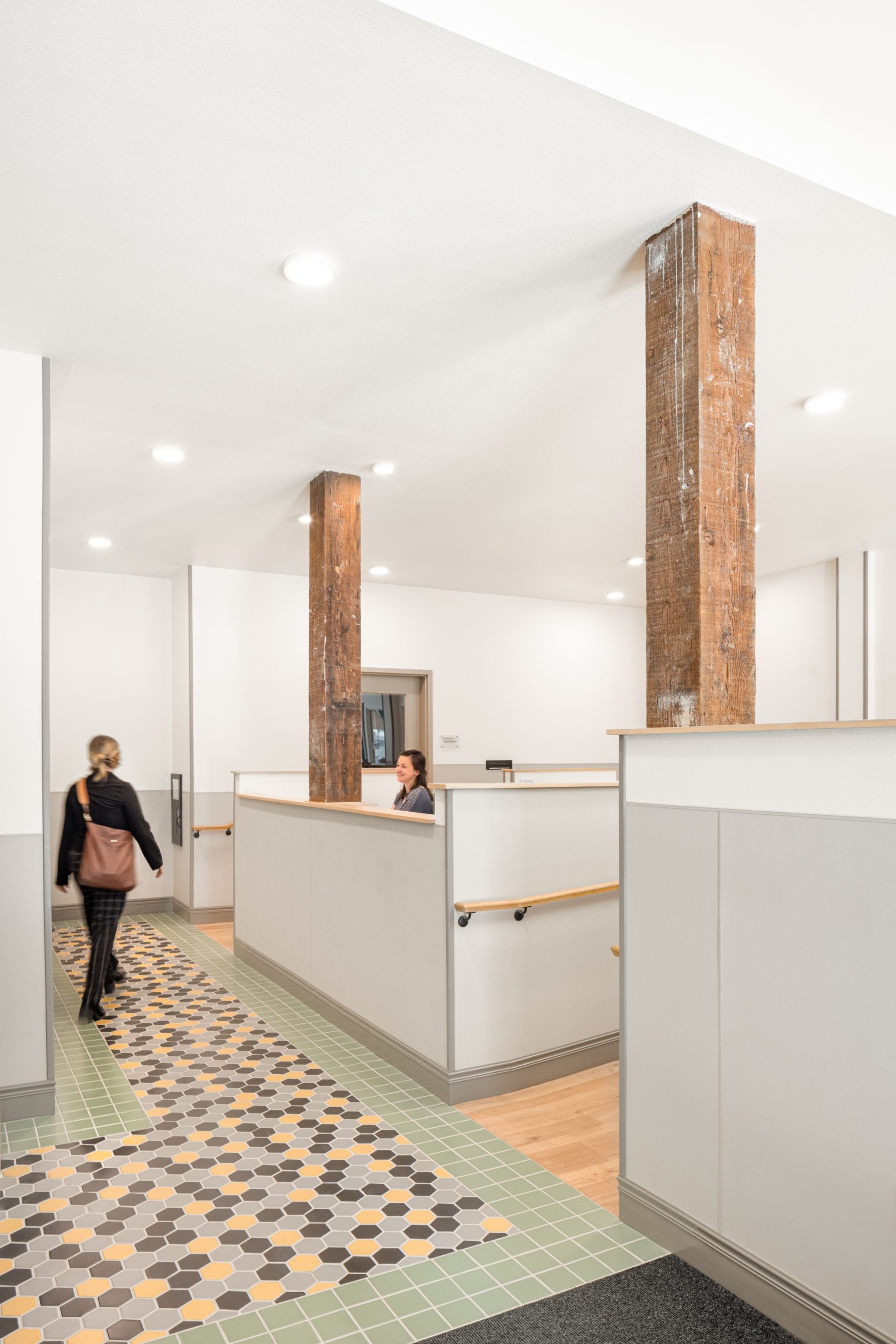
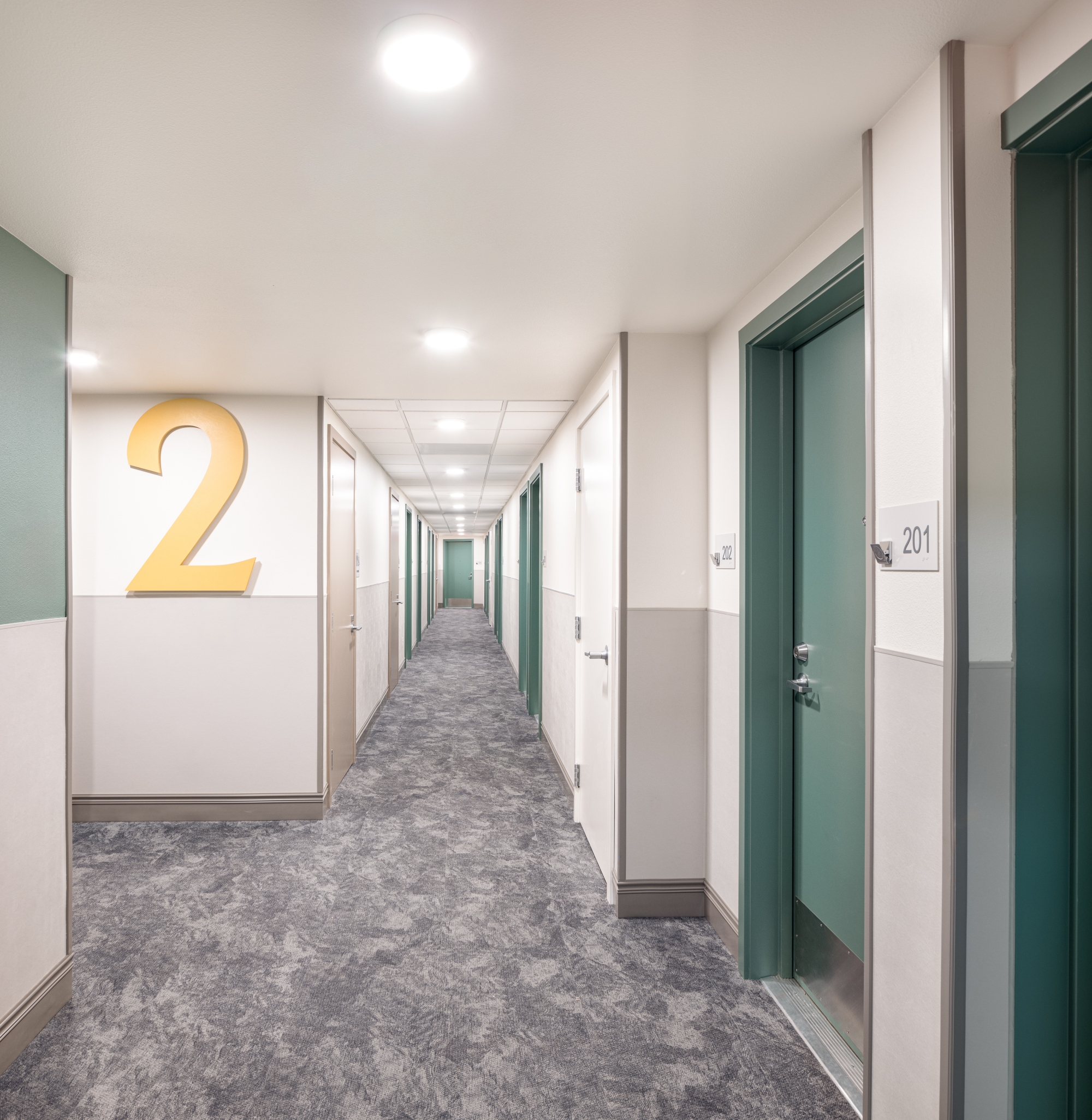
Due to the poor building conditions, along with the immense work required to upgrade the MEP systems and structure, the building was almost entirely gutted. Keeping to the original building layout as much as possible, the design team organized the upper floors and the 66 single-room occupancy (SRO) units in a way that allowed for the addition of kitchenettes to each unit and the modification of bathroom facilities to provide accessibility and privacy, which were not present in the original building. The ground floor was adapted from its previous commercial use to include expanded residential amenities and service spaces, such as a community room with a large kitchen, an office, a meeting room, and a clinic/services space.
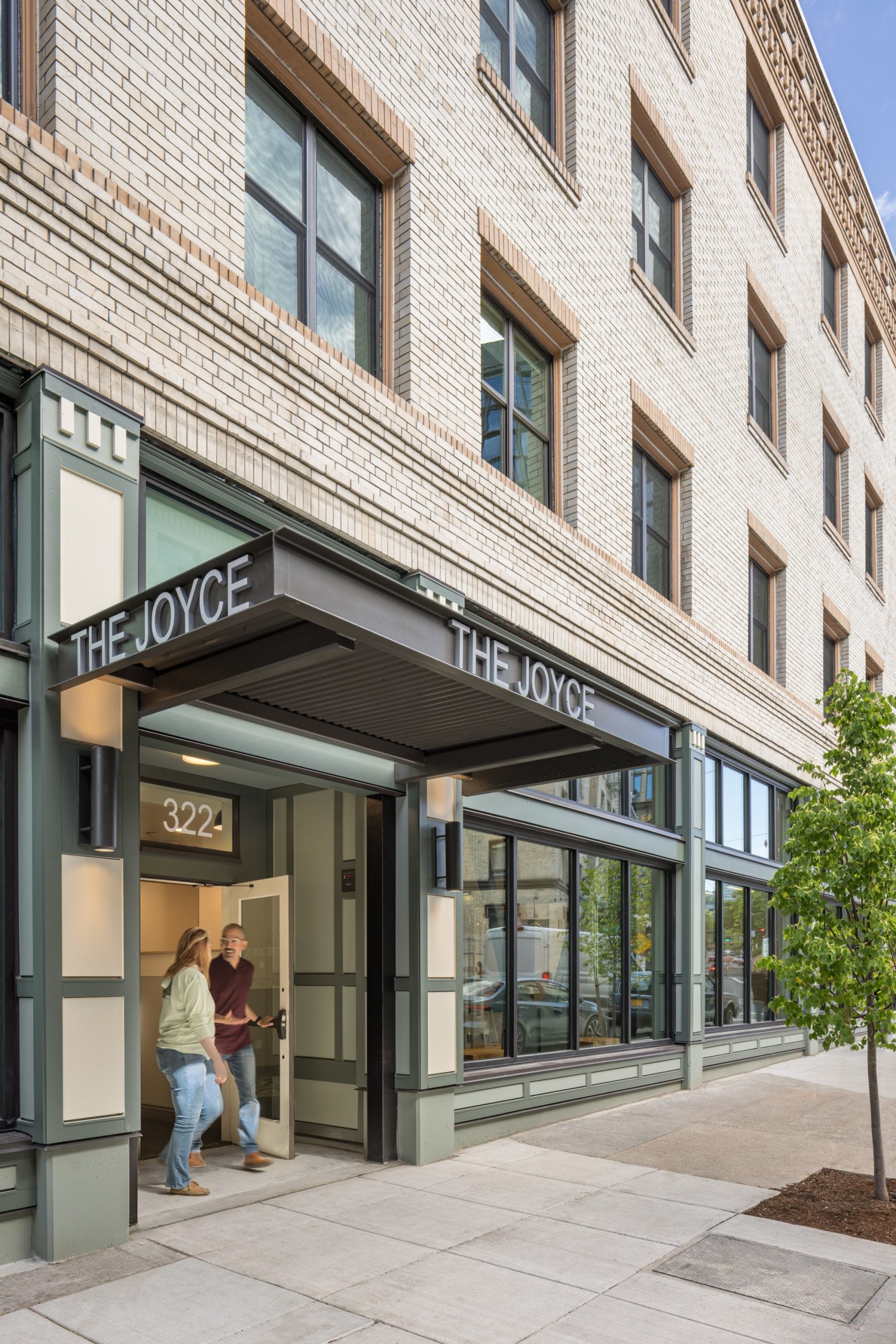
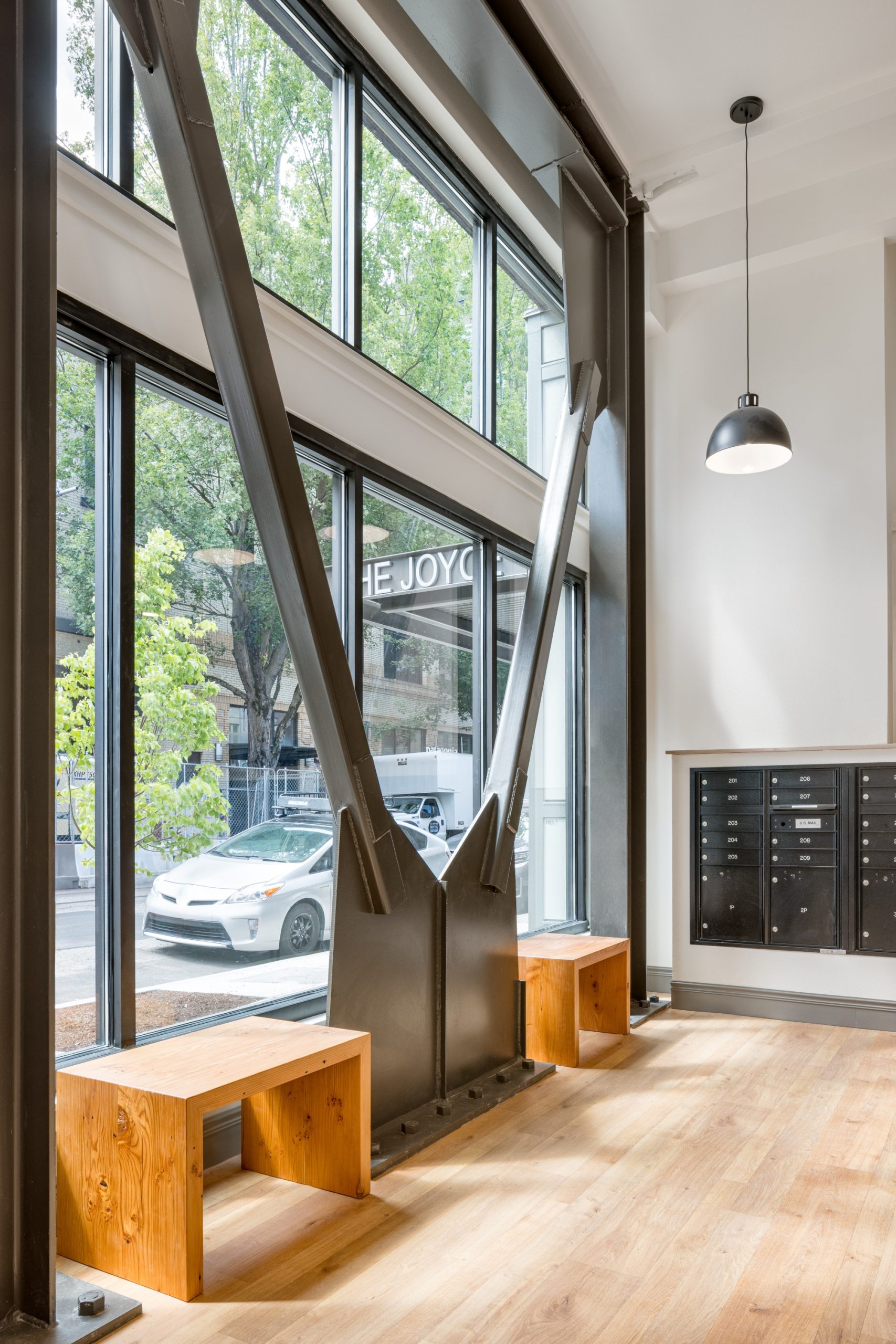
A significant component of the work required to save and adaptively reuse the building was a comprehensive seismic retrofit of the unreinforced masonry (URM) structure. This included introducing a new basement slab, raising existing beams in key areas, structurally pinning the interior of the exterior wall to maintain the original brick façade, and strengthening the structure with both steel and concrete elements to meet current seismic standards. The mechanical, electrical, and plumbing systems were all replaced. Original brickwork was repaired as required, cleaned, and graffiti was removed. New, energy-efficient windows were installed with profiles that matched the existing. A new storefront was designed and constructed, returning this important element closer to its original layout. A historic painted wall sign for the Fish Grotto restaurant was carefully retained and refreshed.
Congratulations to the entire project team:
Carleton Hart Architecture PC
Community Partners for Affordable Housing (CPAH)
BC Group, Inc.
Bremik Construction
DCI Engineers
Vega Civil Engineering LLC
Glumac
Paul M Falsetto Architect LLC
Photos by Josh Partee