




The Merchant Block
Location: Dayton, Oregon
Year Constructed: 1911, 1913
Work Completed: 2025
Project Budget: $16.5 million
DeMuro Award Recognizes: Creative Seismic Upgrade, Economic Development, Tourism
History: The Merchant Block was initially comprised of three distinct properties, purchased sequentially over a period of fourteen years. Those properties contained the Stuckey Building (1911), the Harris Building (1913), and the Bank of Dayton Building (1913), with their property boundaries formally merged in 2022. The Stuckey Building and the Harris Building were individually listed in the National Register of Historic Places in 1986 and were included in the Dayton Multiple Property Nomination.
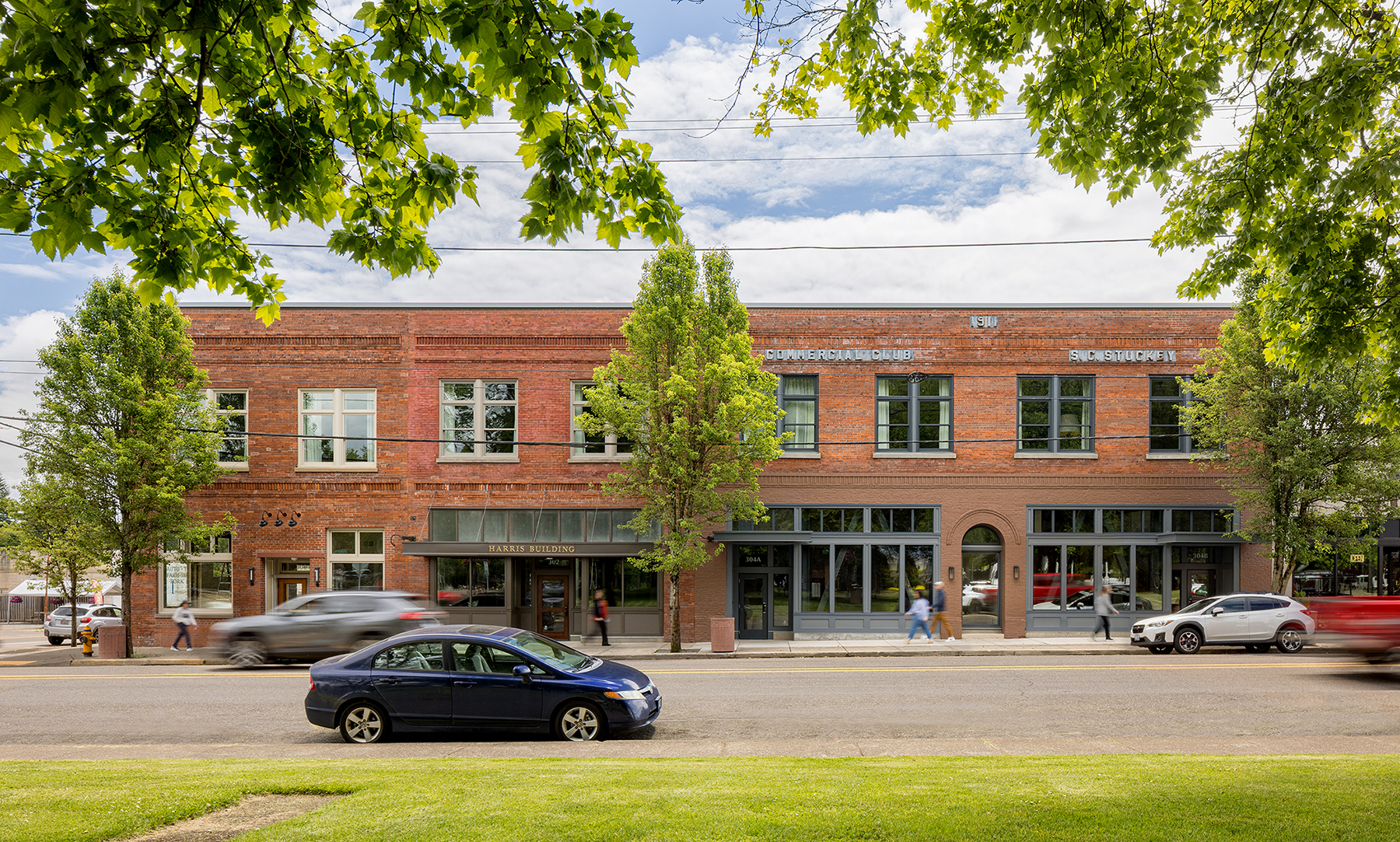
The Stuckey Building (1911) was commissioned by S.C. Stuckey and designed to house a grocery store and post office on the first floor, as well as professional offices and the Commercial Club on the second. The Harris Building (1913) was initially owned by Mrs. Ella J. Harris and designed to house her husband’s drug store on the first floor, with an IOOF assembly hall on the second. When the project developer purchased the property in 2008, it contained a restaurant with an apartment above. And finally, the Bank of Dayton Building (1913) included the Bank of Dayton and the Dayton Tribune, with the Artisan Lodge’s assembly hall on the second floor.
Overview: All three existing buildings underwent extensive seismic upgrades to meet current code, involving some innovative structural engineering to minimize the impact on the spaces. For example, hidden connections were made at the Bank and Harris buildings, linking them to the two braced frames inserted in the Stuckey storefront to provide lateral load resistance, thereby eliminating the need for braced frames at those two buildings.
The brick exterior of the three existing buildings was patched as required, repointed, and cleaned. New windows were installed that carefully matched the original in profile. Paint was applied at the lower Stuckey storefront to protect the brick that was sandblasted sometime in the past, removing its original hardened weather face.
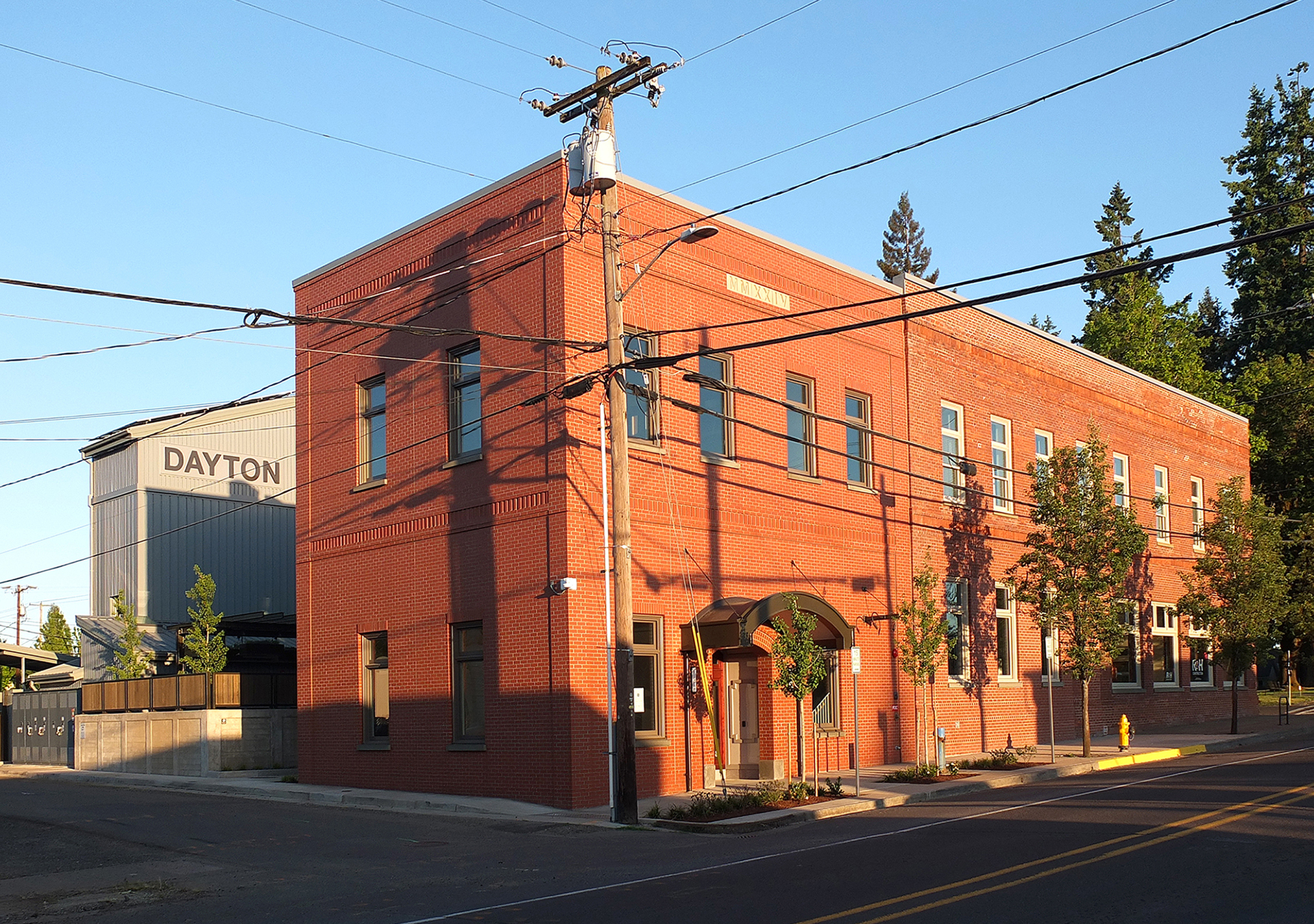
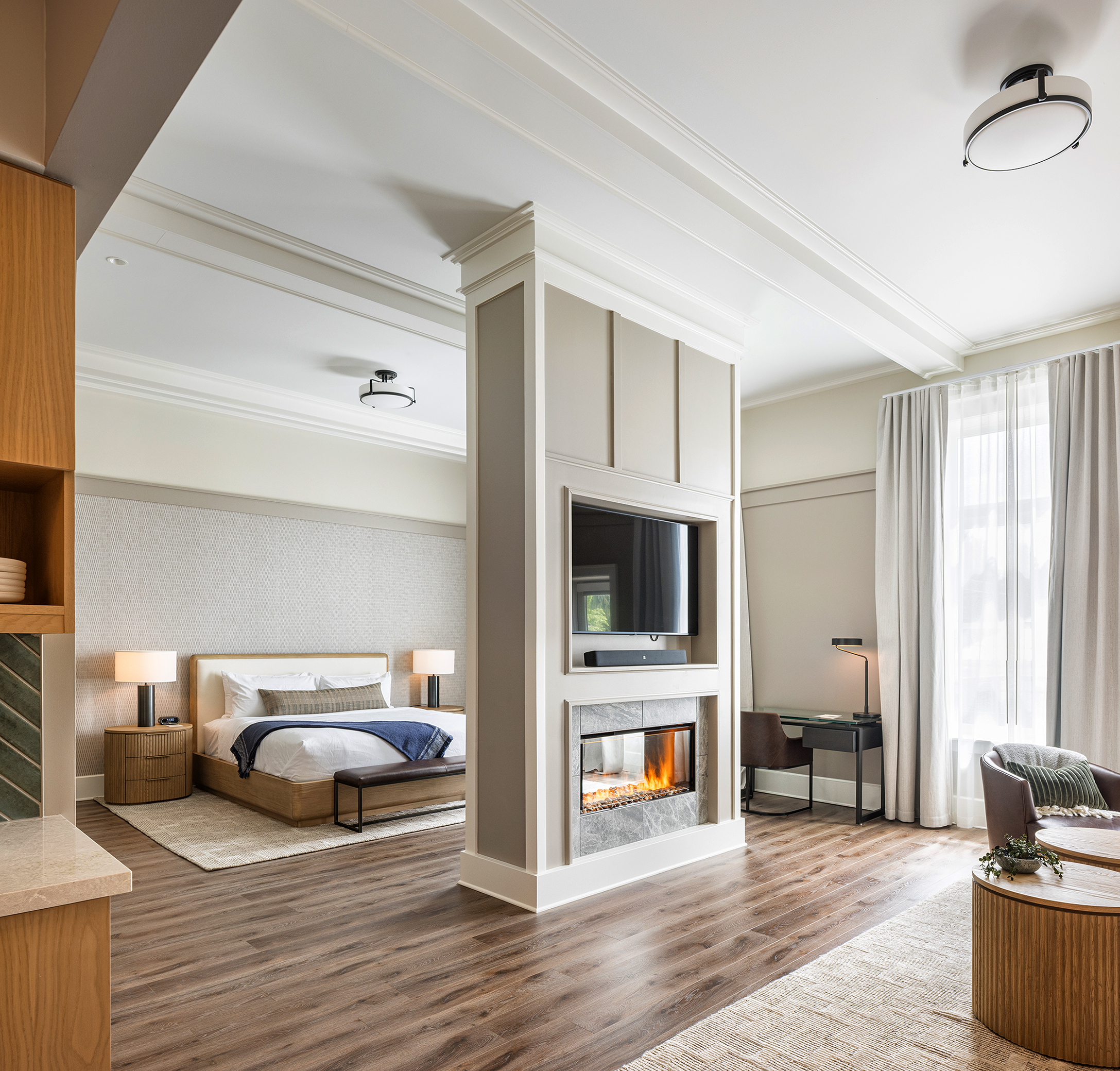
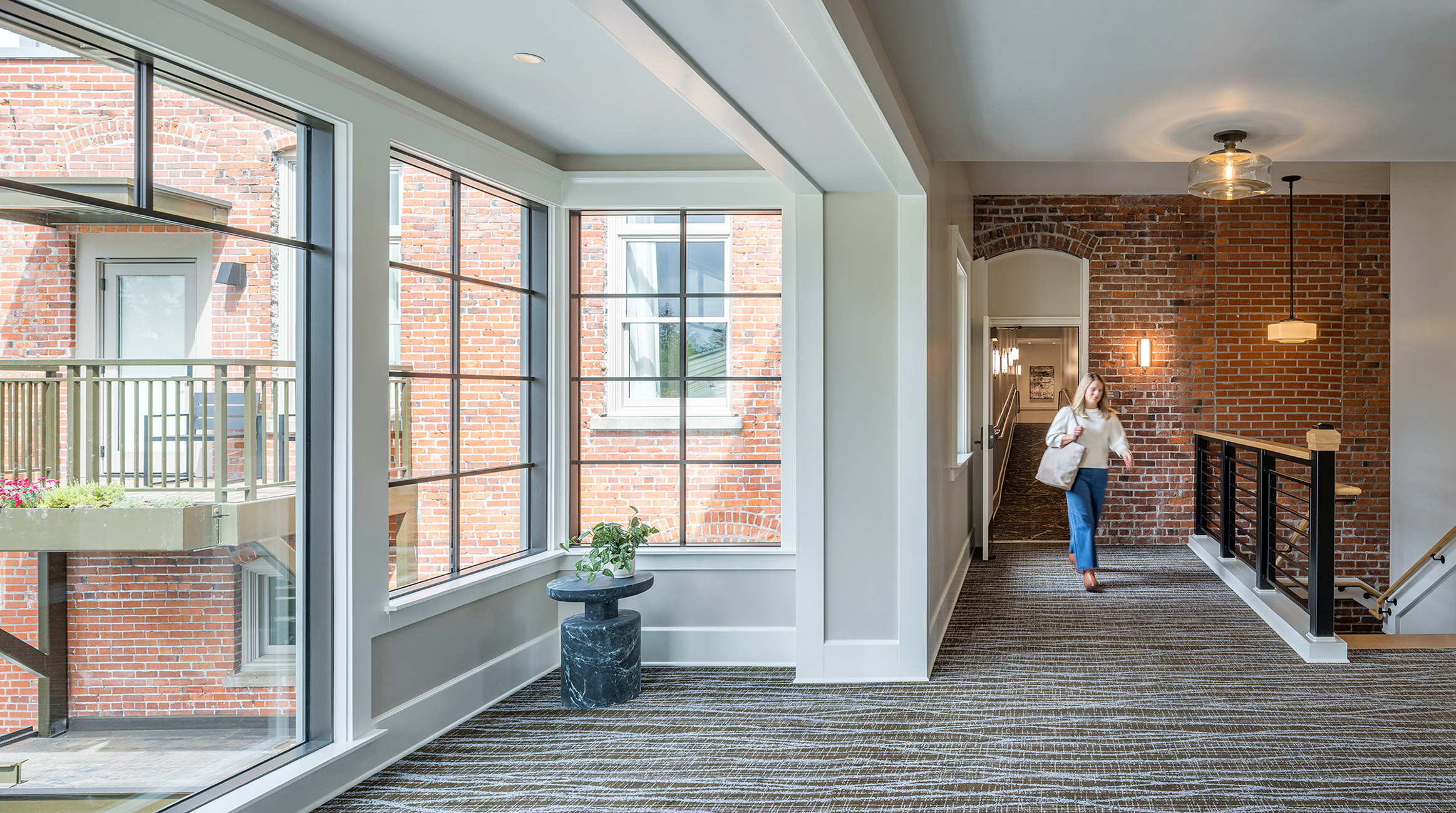
The exterior of the New Hotel Building was designed to be fully compatible with the three existing buildings by use of a comparable brick color and similar masonry detailing. A boutique hotel named “The Inn at Dayton” comprises the entirety of the second floor of all buildings, and includes twelve guest rooms, a guest lounge, and all the required support spaces. Four commercial spaces have been provided in the three existing buildings, with anticipated uses including food and coffee service, a tap house, and a wine store. Finally, the space dedicated to the Courtyard was made possible by locating all the mechanical equipment on the roof level, which became the workhorse of the project. In the roof areas where no mechanical equipment was present, 136 solar panels were installed, including on the braces engineered to support the parapet walls.
Congratulations to the entire project team:
Paul M. Falsetto Architect LLC
Twin Towers, LLC
TM Rippey Consulting
Engineers
R&H Construction
IDEA
DELA Studio
MKE & Associates, Inc.
NCLOSE Building Science
Listen Acoustics, Inc.
Studio Lumen
Lensa Consulting
Geotech Solutions
SORA Design Group
Elevate Building Commissioning
IES Electrical
Rayborn's Plumbing, Inc.
HVAC Inc.
Miller's Sons Contracting, LLC
Primo Construction LLC
D&R Masonry Restoration Inc
Kraft Masonry Inc
Westside Drywall Inc.
District Painting Co.
Cascadian Landscapers, Inc.
Floor Solutions, LLC.
Northwest Structural Services Inc.
Advanced Energy Systems
Uncommon Cabinetry Inc.
Architectural Castings Inc.
Portland Millwork Inc.
Washington Roofing Company
Sign Wizards Inc.
Lawson Corp.
Parker Concrete Inc.
Photos by Josh Partee